ROCK GARDEN
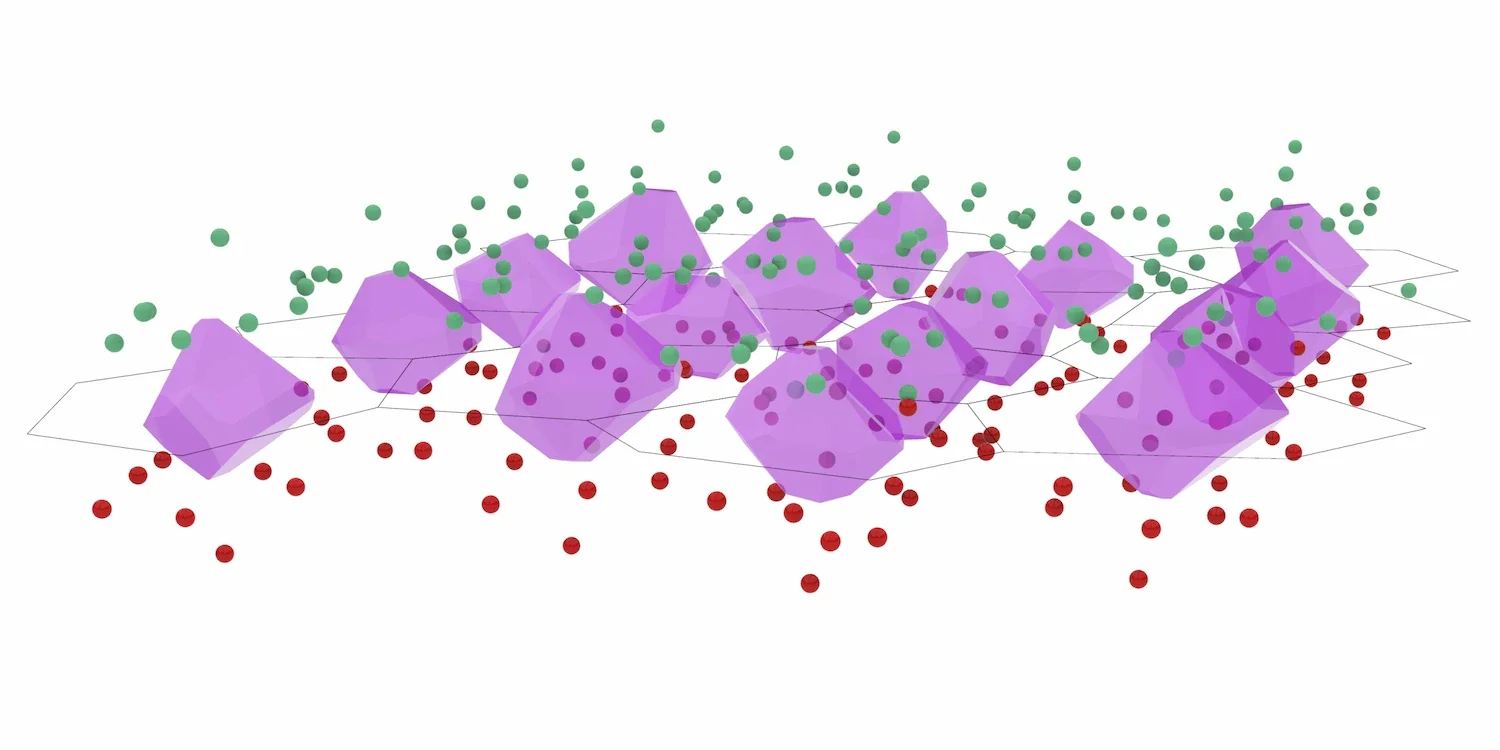
Crystal formation after 3D Voronoi
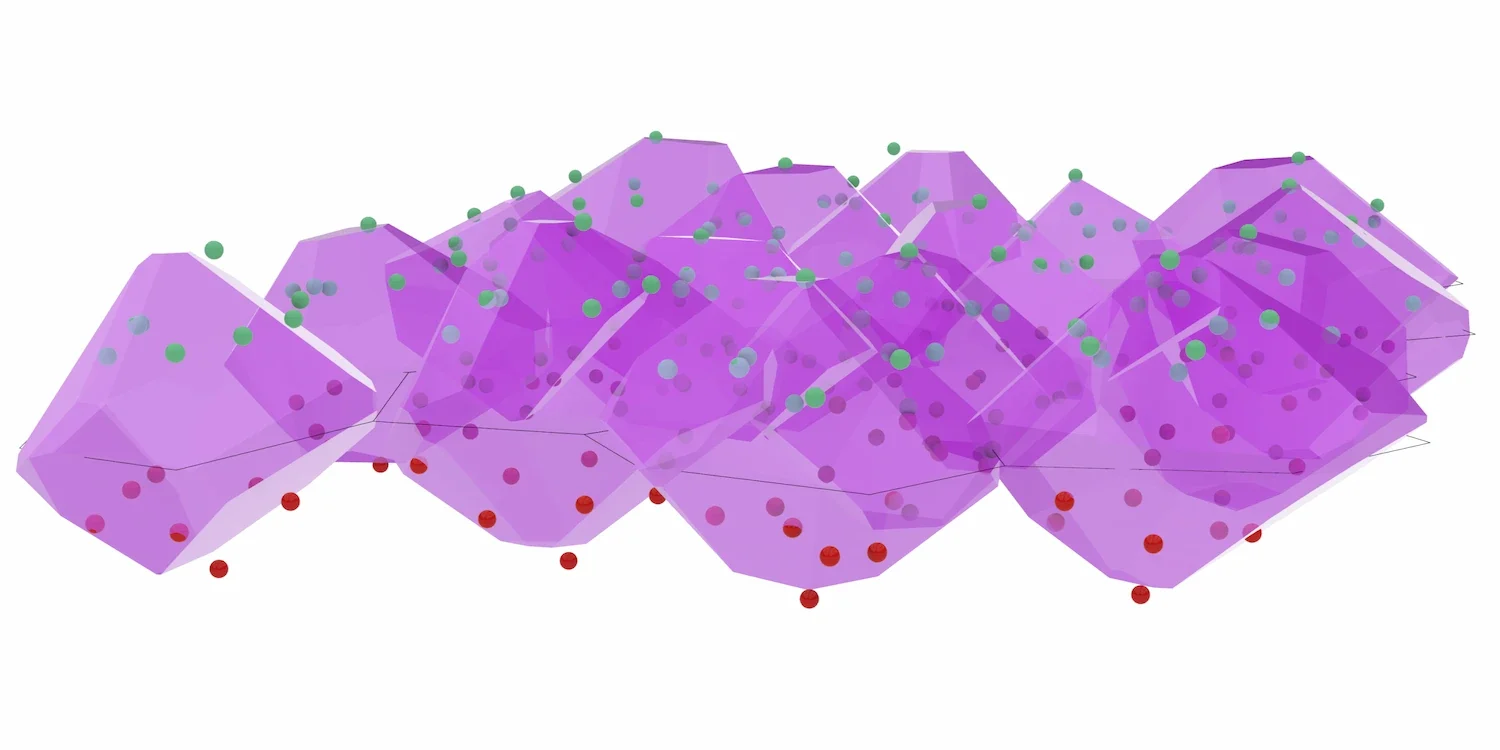
Box Morph scales the crystals to the original cell
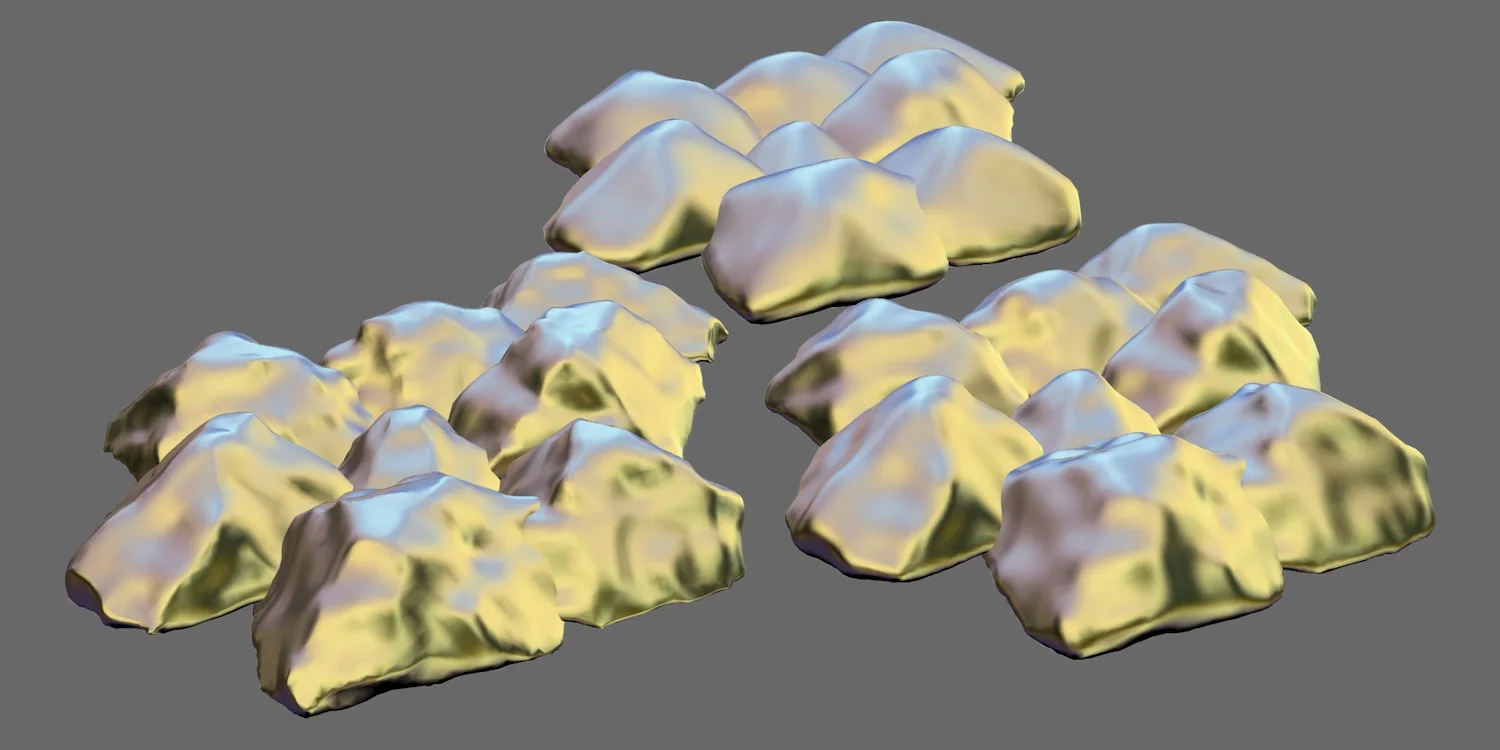
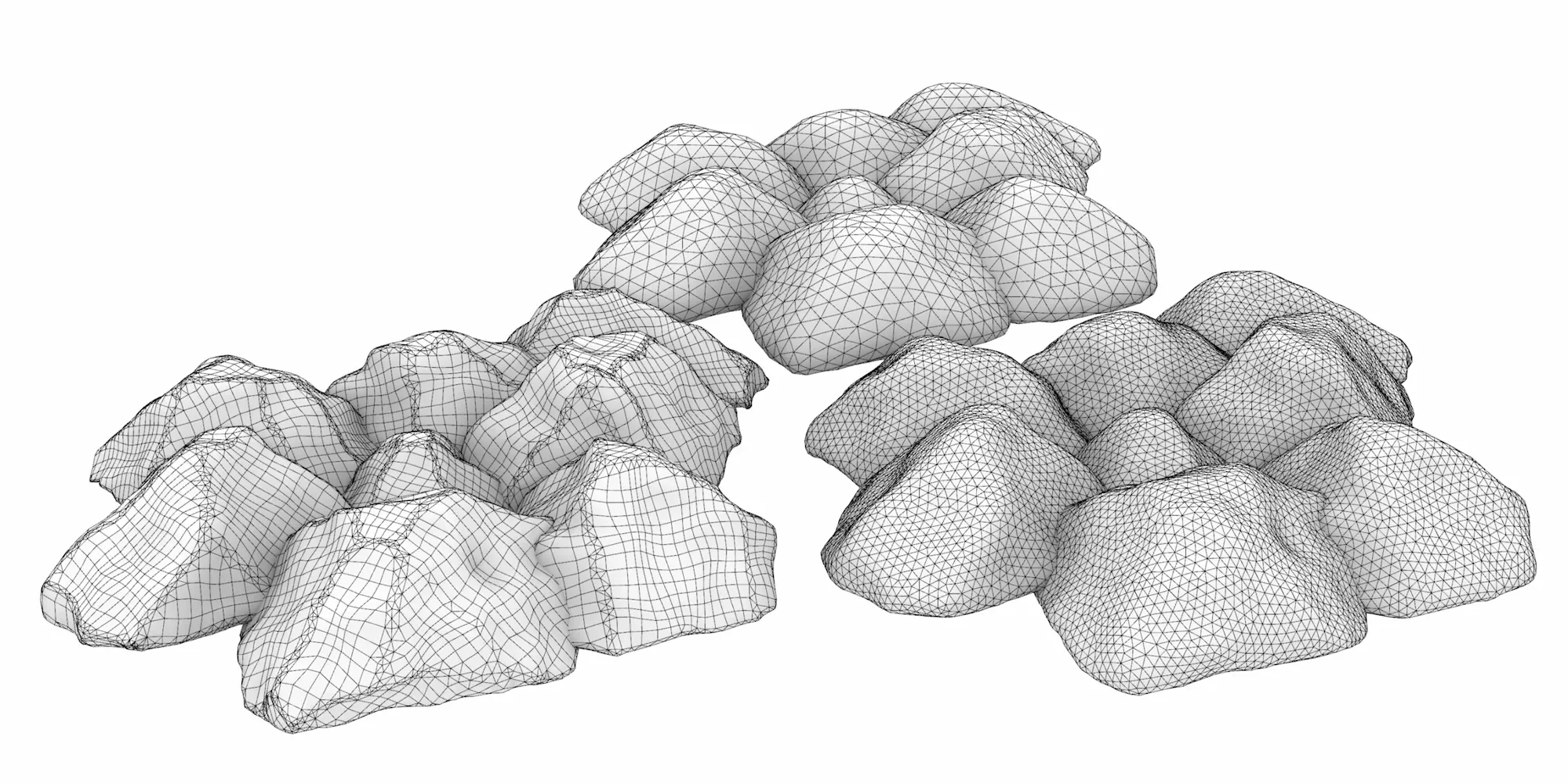
Comparison of crystals after Field Morph (left), Tri-Remesh (right) and Laplacian Smoothing (rear)
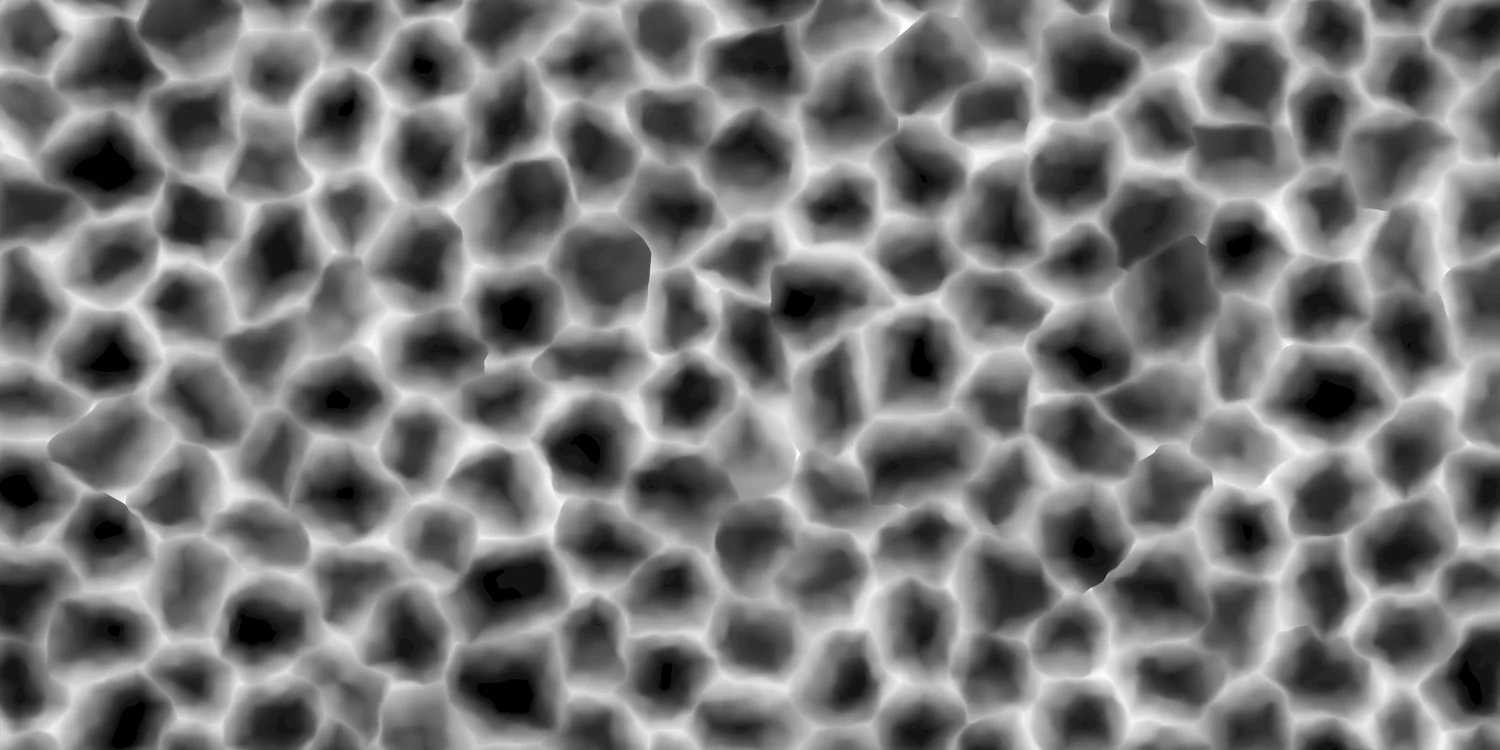
After Field Morph
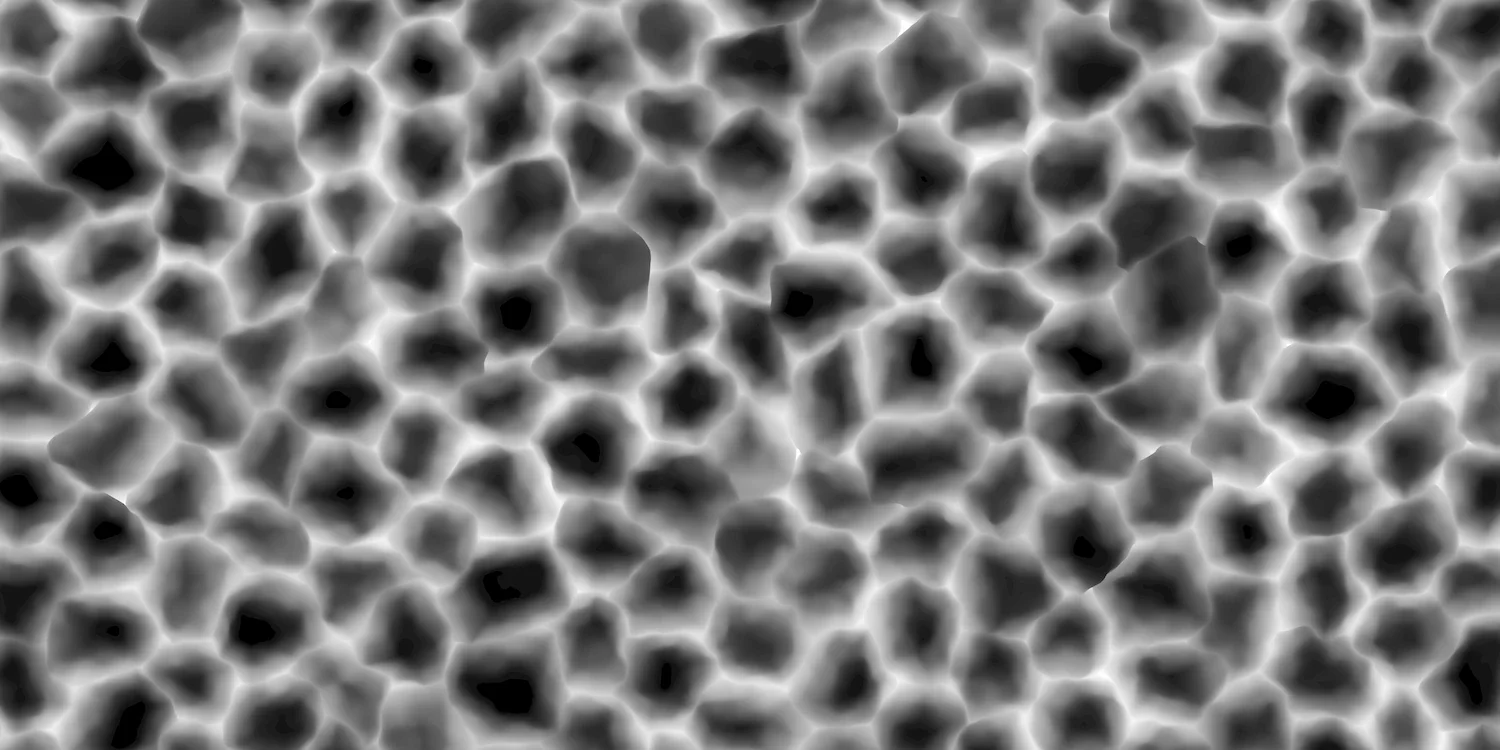
After Fine Tri-Remesh
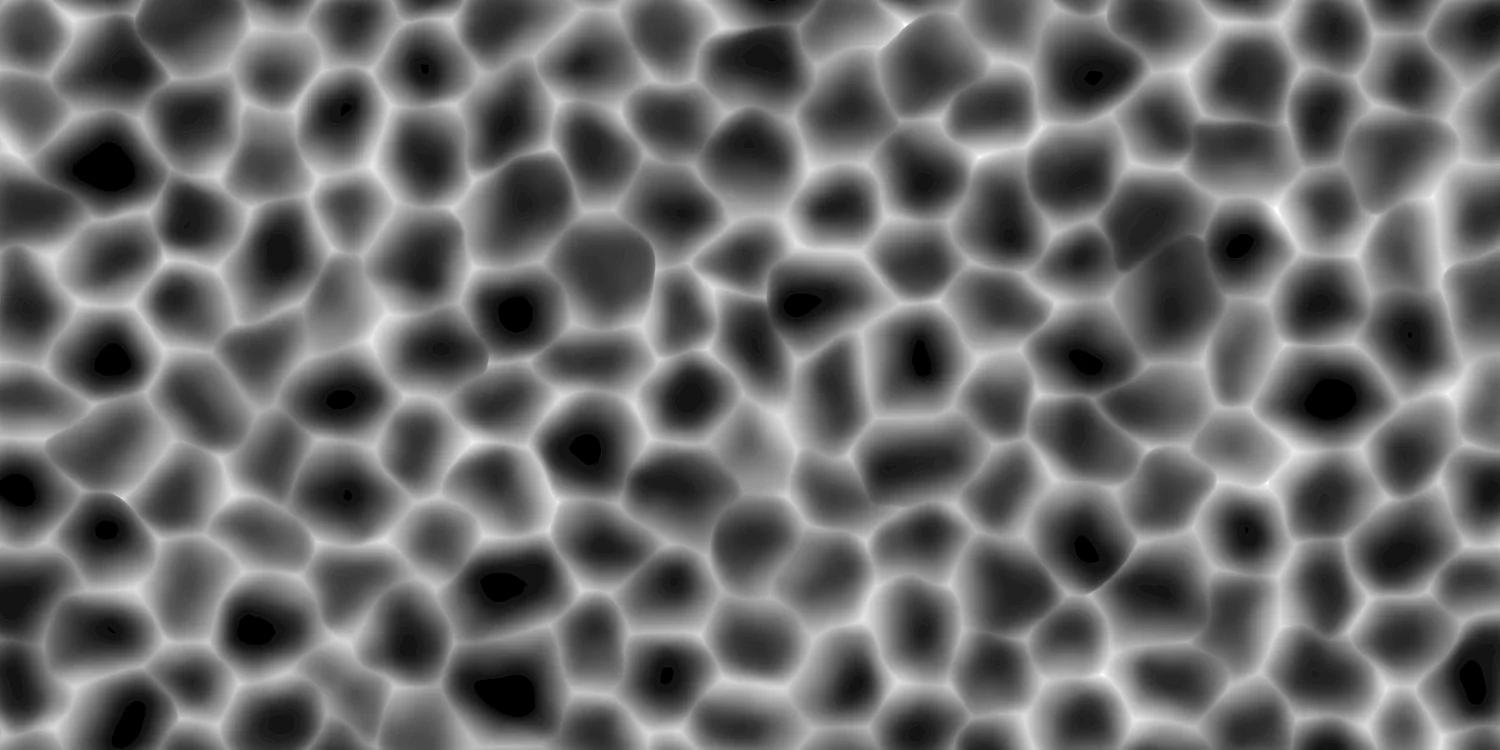
After Coarse Tri-Remesh
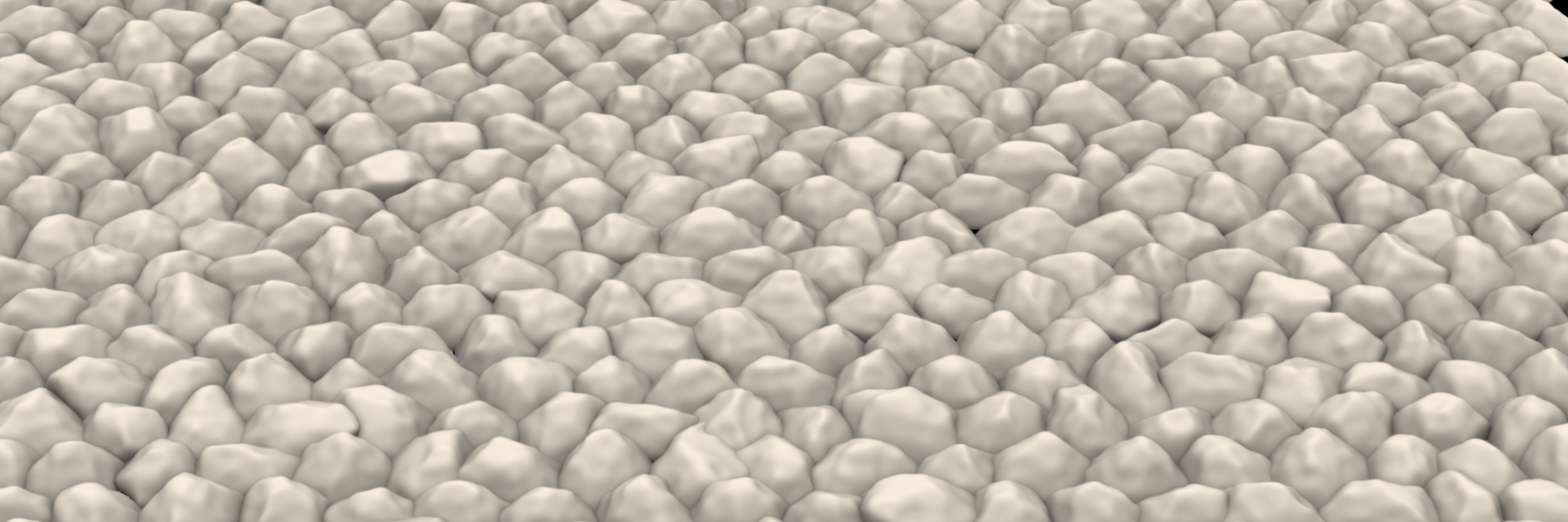
The rock surface finish is controlled by the Tri-Remesh edge length (longer yields smoother)
Create random cells.
Place points randomly above and below each cell. Push the points away from the cell edge by populating the edge curve and using it as a point seed in the Grasshopper Random Function.
Use the 3D Voronoi Function to form a crystal within the cell. The Bounding Box of the random cell is used as the reference.
With Box Morph, the crystal is scaled to the original cell Bounding Box.
The crystal is then trimmed, closed, and transformed into a mesh.
In this example, the Tundra Noise Functions and Field Morph are used to distort the crystal into appearing more like a rock. The field strength may be used to affect this distortion.
To create natural rocks, follow the Field Morph with both the Tri-Remesh and Laplacian Smoothing (Weaverbird Plug-In).